ROQ Relay Strategy Guide
By Head Coach Matt Fultz
The upcoming ROQ Relays will be on one (or more) days of your choosing between May 12th, 14th, and 16th. The event will feature a brand new, exciting format showcasing ROQ's signature capacity-style workouts. As we developed the format framework, we wanted it to reflect how an actual ROQ class works. Below, I'll provide details on the format, the specific exercises you will need to be prepared for, and insight into my strategy and mindset that I will personally use.
Notes on the format
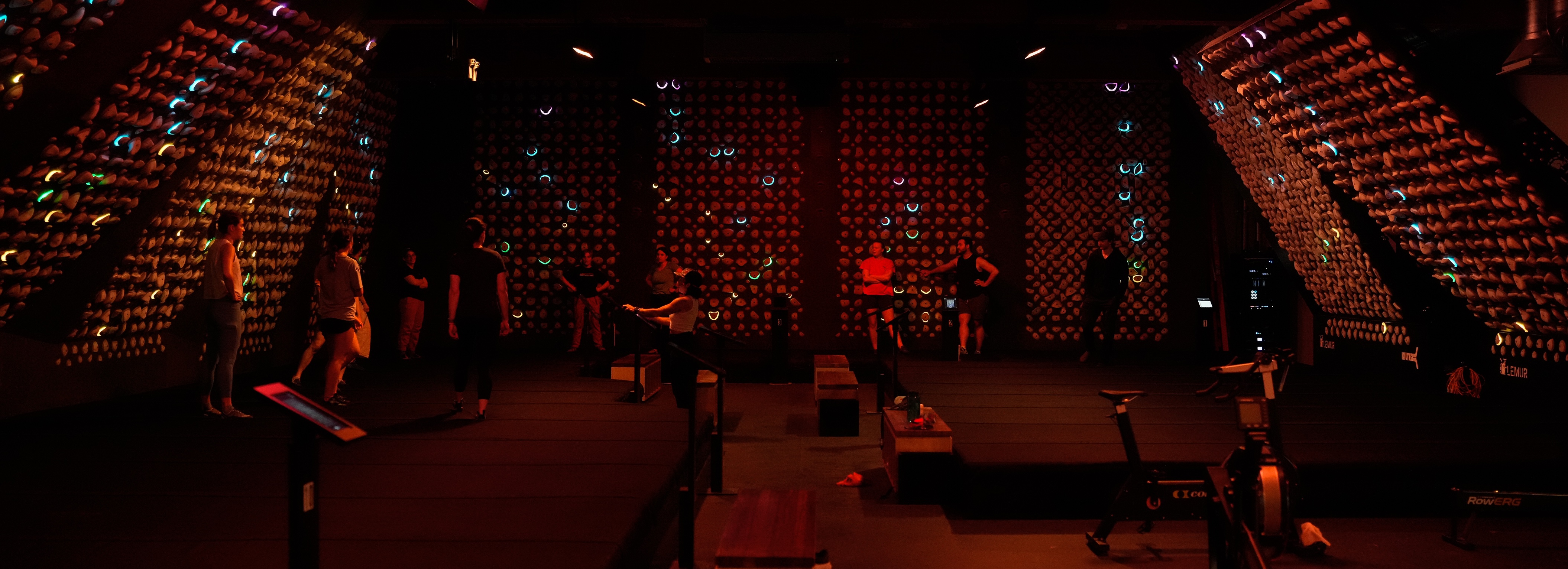
- The relays will closely mirror a ROQ class; there will be a phase of rowing, a phase of floor/conditioning, and the remainder of your time climbing on the Kilter Boards. You will have 1 hour to complete as much of the "workout" as possible.
- You must complete a "buy-in" by completing the rowing and floor work before you can move on to the climbing. Your final score will be the number of ROQ-selected boulder problems you can complete on the Kilter Boards before the hour expires (more on this later).
- Depending on your schedule, you can have as many as 3 attempts at the relay!! You're welcome to attempt a new high score once on each of the 3 days of the event. My recommendation will be to do the competition twice. Once as a dry run, testing out your strategies for each element of the comp, and then again (after one or more rest days), with optimized strategy.
The Buy-In
Phase 1: The Row
As fast as you can, you must complete a 2000-meter row on the rowing machine.
This can be very intense on the legs, and without proper pacing, it can be easy to burn out your power endurance energy system.
Phase 2: The Floor
As fast as you can, you must complete:
- 60 Alternating Lunges per leg
- 50 Mountain Climbers
- 40 Cossack Squats per leg
- 30 Toe-Touch Sit-Ups
- 20 Full-Stop Push-Ups
- 10 Hanging Knees-to-Chest
If you're unsure what some of these exercises are, they will be demonstrated for you before the competition. In the meantime if you want some practice beforehand, I would suggest searching for form videos on YouTube and practicing them at home.
The Climbing
Once finished with the Buy-In, you can officially start accumulating points! We have selected and set 30 Kilter Board problems per category. You must attempt to complete as many of them as you can before the remainder of your time runs out. Every boulder you complete, you will earn 1 point. Your total points will be added to your scorecard and that will be your final score. So be strategic! The problem list will be revealed on the first day of competition.
My Strategy (in theory)
Below, I will share some insight into how I would personally approach this event before ever trying it out. This may differ from your strategy, and that's totally okay! This is meant to demonstrate the way I think of each part and my strategy going into the relay.
Before the comp, I will make sure I am well hydrated, fueled, and ready to go! I'll arrive at ROQ early to allow plenty of time to warm up. I will start on the rowing machine to make sure to get some light rowing in before event start, since I know rowing will be the first section. I will also want to make sure I'm fully warmed up for climbing. I do not want to waste any of the comp hour on warming up. I will go to one of the sessions during the week, and then another on the weekend. This will allow me to solidify my strategies, know which boulders are on the problem list, and achieve a better score that weekend.
I believe a reasonable pace for the climbing portion would be 20-30 seconds (although this may take longer for less experienced climbers) to complete a single problem, and 1 minute of rest between each problem. Assuming I flash each problem, that would take me approximately 40 minutes to complete the full list. Therefore, I would want to complete the Buy-In in no more than 20 minutes total, or 10 minutes for the row and 10 minutes for the floor. Of course, I want to also allow time for transition (putting my climbing shoes on, grabbing my chalk, drinking some water, and displaying the problems on the board). A difficult task, but one worth strategizing for!
The Row
I know that I am a bit weaker on the rowing machine, and the Floor exercises are also lower body heavy. So I will pace myself on the rower. I know from experience that I can maintain a 2:30/500m pace for a good amount of time, which would equate to exactly 10-minute 2000 meter row. Perfect!
The Floor
I would absolutely split up the floor workout as much as I could. The Rowing combined with the floor work is very lower body heavy, so I want to make sure I'm pacing myself on the lower body exercises and going a little slower than I might think I need to be going. I might split it up into something like this in order to complete all reps:
- 20 Alternating Split Squats
- 25 Mountain Climbers
- 15 Toe Touch Sit-Ups
- 10 Full Stop Push-Ups
- 10 Hanging Knees to Chest
- 20 Cossack Squats
30s Rest
- 20 Alternating Split Squats
- 25 Mountain Climbers
- 15 Toe Touch Sit-Ups
- 10 Full Stop Push-Ups
- 10 Cossack Squats
30s Rest
- 20 Alternating Split Squats
- 10 Cossack Squats
Transition
I believe I can complete this in 10 minutes with proper pacing.
This is complex, and might be difficult for me to track. I'll need to be sure to write down my plan and check off the reps I complete to make sure I'm not doing too many reps (or too little).
The Climbing
For the climbing, I would want to start with a few "sure sends" first. Getting 8 to 10 lower V-grade problems on my scorecard would be a massive confidence boost. Then I would move to try some of the harder, higher V-point problems on the list to see if I can knock those out while I'm still relatively fresh. However, since all problems are worth the same amount (1-point) I'll have to make some game-time decisions on which problems to try depending on my remaining time and energy.
I will limit myself to 2 tries maximum per problem. If I'm unable to send the problem in 2 tries, I will move on.
ROQ Relays: May 12, 14, & 16!
We are so excited for this format and we're looking forward to seeing what you can achieve!